
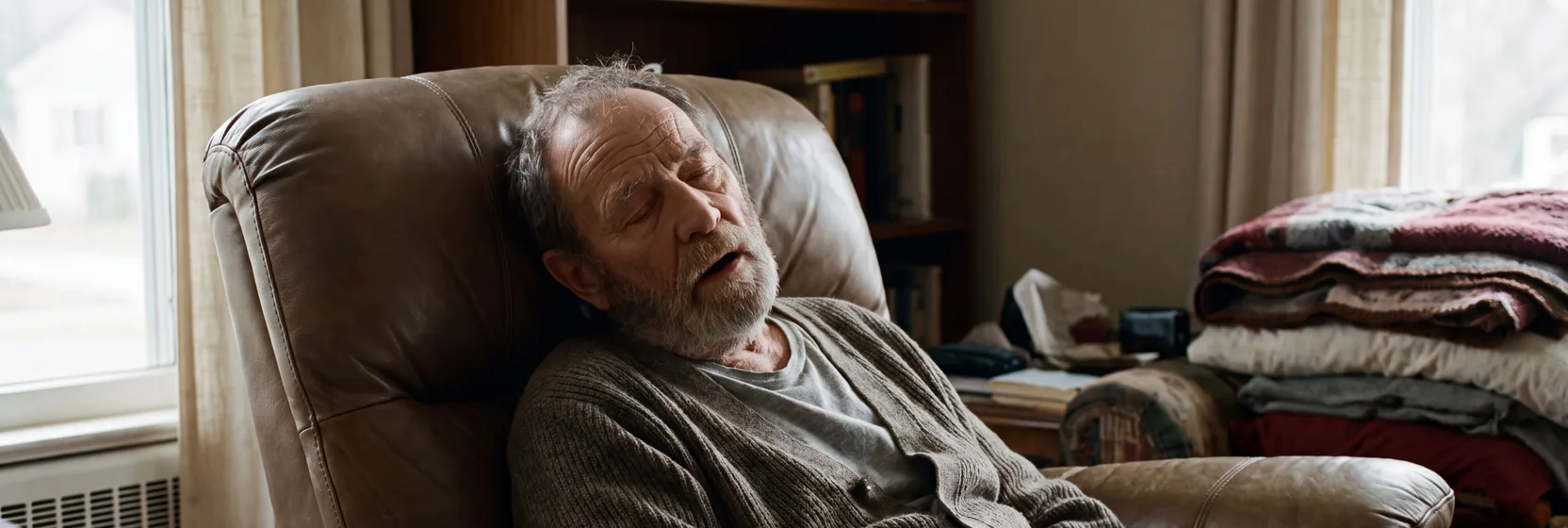
When they won't wear a medical alert
You bought the medical alert pendant, and now it's in a drawer because they won't wear it. When you ask about it, you hear "It's ugly," or "It makes me feel old," or "I'll wear it when I need it." You can guess how that goes: on the day it's needed, it's sitting on the nightstand.
This is one of the most common problems families run into, and arguing about it hardly ever works. You'll get further by removing the reason to say no.
Why the pendant stays in the drawer

Most people who refuse a medical alert have reasons, usually about how it looks and what it says about them, and those reasons are worth listening to.
- Everyone can see what it's for. Anyone in the room who sees a pendant can tell that somebody decided this person can't manage. A watch only shows the time.
- It only works when someone presses it. After a bad fall, a stroke or a faint, the person may not be able to press anything. Plenty of people know that, and decide it isn't worth wearing.
- It's one more thing to remember. It's a second device to charge and to put on and take off, so it's easy to forget.
What changes with a watch instead of a pendant

Lanturne runs on an ordinary Wear OS smartwatch, such as a Samsung Galaxy Watch. From across the room it looks like any other watch, and a nice one at that. The HELP button is on the watch face. Everything else works without anybody pressing anything at all.
| What worries you | What Lanturne does |
| A fall, with no way to press a button | The watch's own fall detection sends an alert to your phone. If location is on, the alert shows where it happened |
| Nobody hears anything all morning | The watch asks for a quick check-in at a time you choose. If there's no answer, you get an alert |
| The watch is off, out of battery or out of range | If the watch stops reporting for longer than you choose, you get an alert |
| The watch is on the wrist, but something is wrong | If a worn watch finds no pulse and no movement for as long as you choose, you get an alert |
Here's what you see on your phone, and what happens when an alert comes in.
How to bring it up
- Start with the watch. "I'd like to get you a nice watch" goes over much better than "I'm scared you'll fall."
- Make the check-in about you. "A quick check-in in the morning so I stop calling you at work" makes it a favor to you. Nobody feels tested, and most people are glad to do a favor.
- Choose a watch worth wearing. A refurbished Galaxy watch starts at $89 and looks like any other good watch. If the person already wears a Galaxy Watch or a Pixel Watch, most of the work is done.
Try it for a week
Here's what it costs, and who one subscription covers.
See what you need, or start the free week.