Every watch needs a keeper.
Each morning, your mom or dad taps I'm OK on their watch, and you see it on your phone.
You get an alert if they press for help, the watch detects a fall, a check-in is missed, or the watch goes quiet.
If you don't respond, your backup contact gets it too.
7 days free. Then $120/year ($10/month), or $30 month to month.
Requires an Android phone and a compatible Wear OS watch. Watch not included.
Price and what you need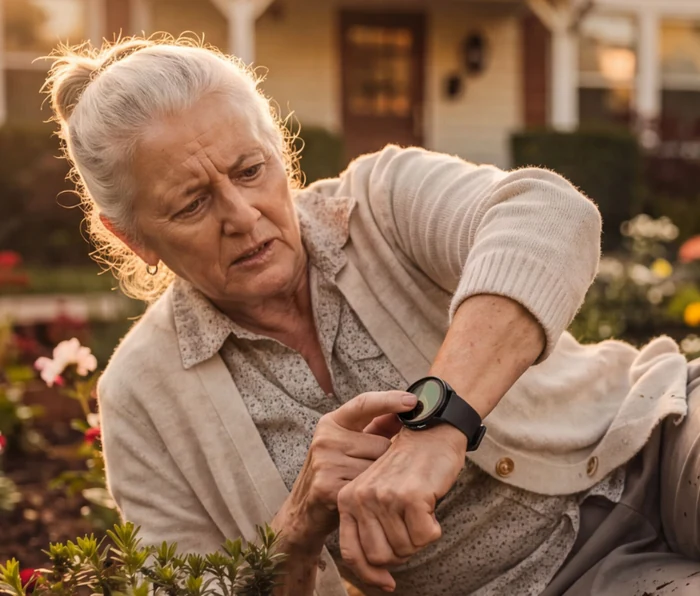
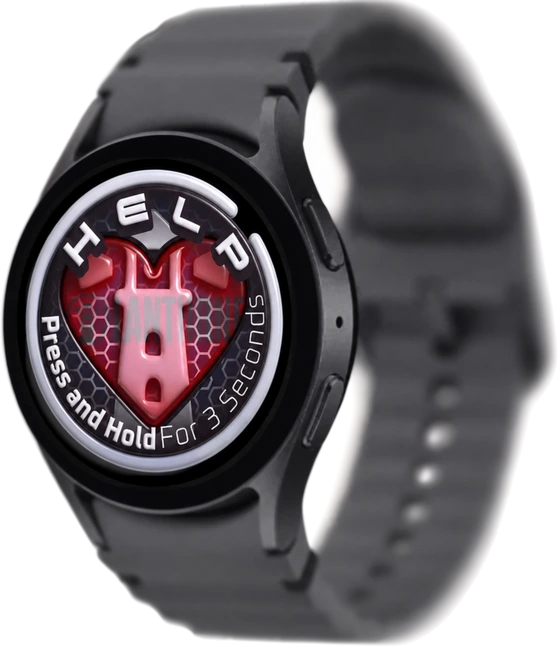
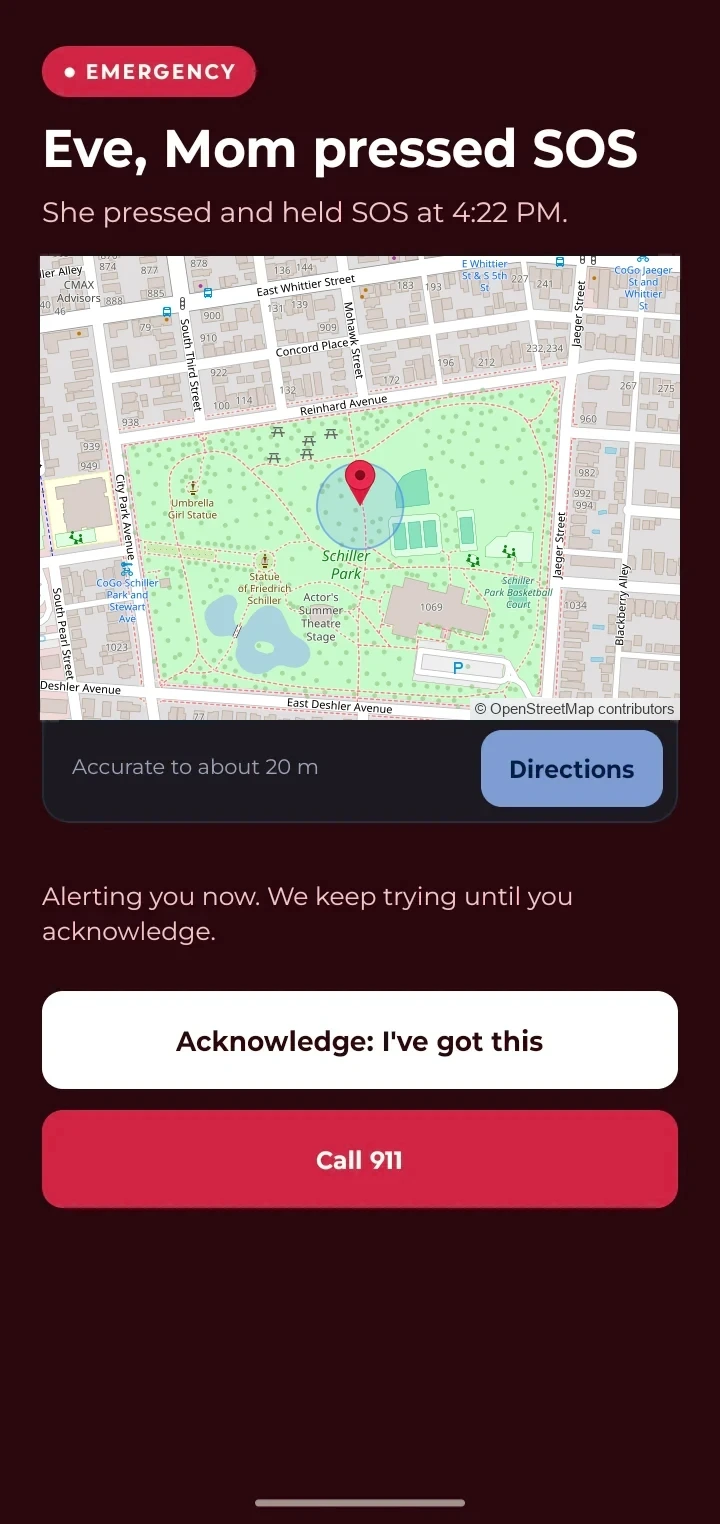
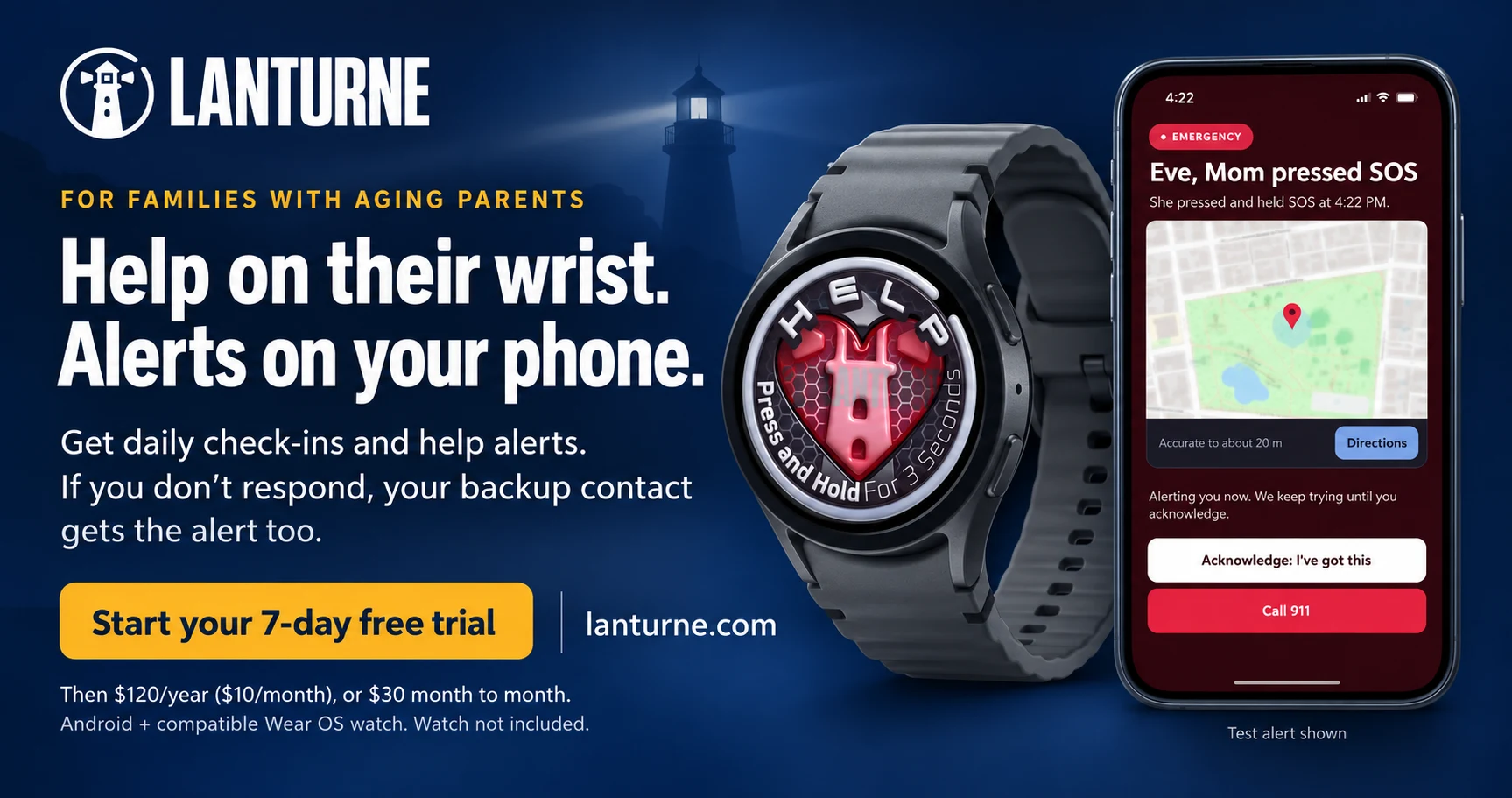
Illustrative scene. Test alert shown with a sample location.
See that they've checked in, without another phone call.
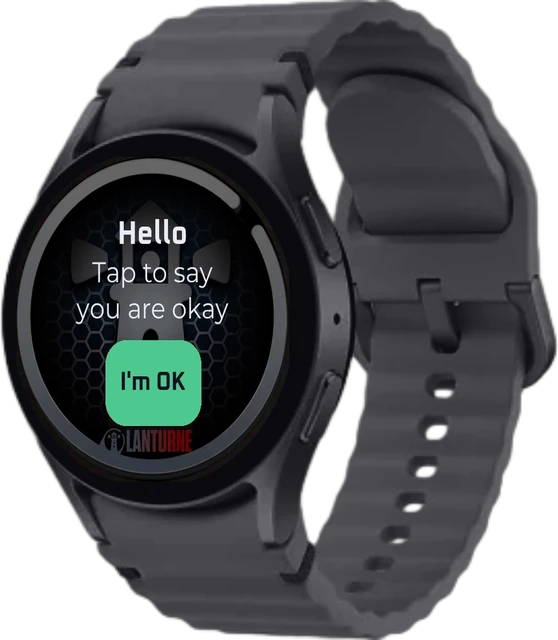
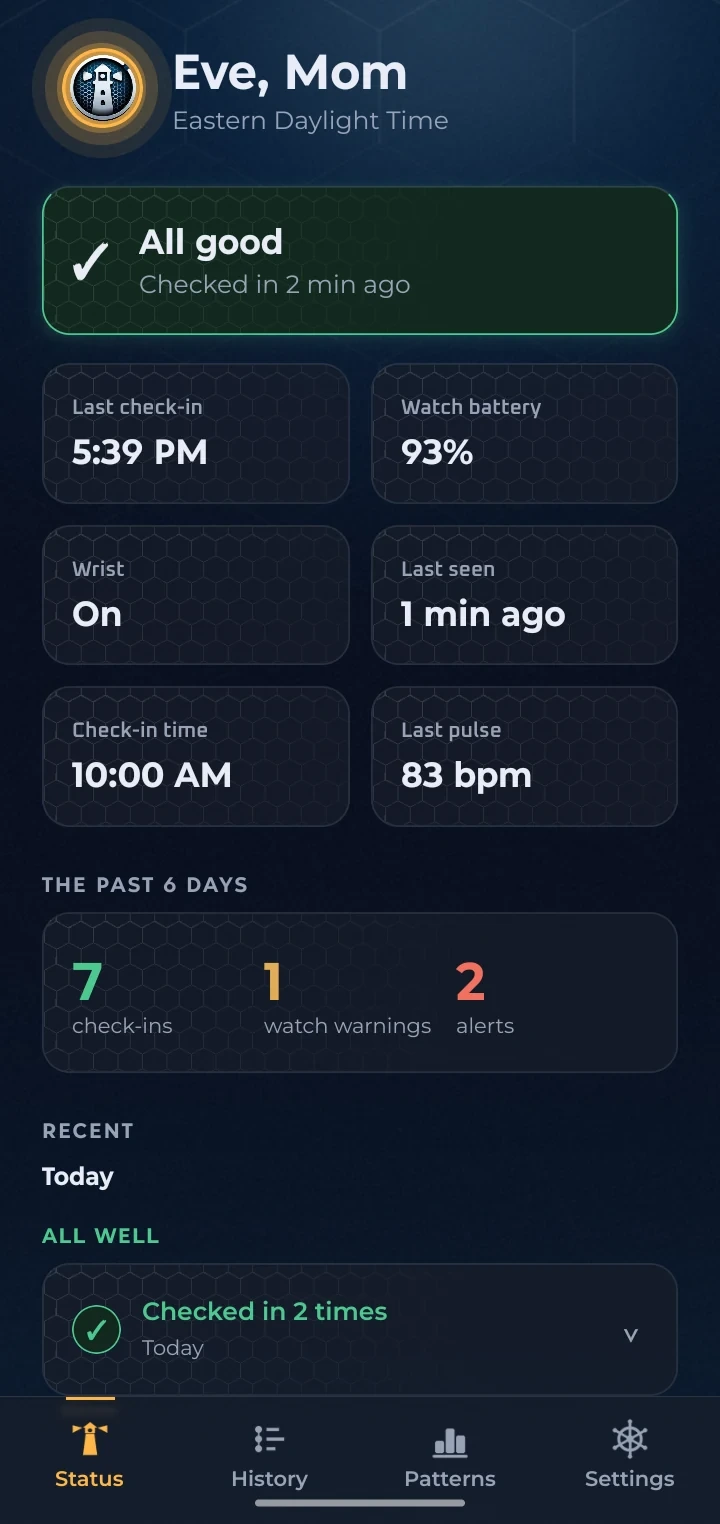
Screens from our test watch and phone.
billed $120 annually after your free trial
Or pay $30 month to month.
Includes one wearer and two family recipients: you, and a backup contact who gets the alert if you don't respond.
7 days free. Cancel any time in Google Play.
Start your 7-day free trialAfter a fall in the garden, she holds HELP on her watch to ask for help. Here is what happens next, in a test we ran with a Samsung Galaxy Watch7 (40 mm) and a Moto G phone. The test shows a HELP request; the phone labels it SOS.

They press and hold HELP on the watch for three seconds. A short countdown lets them cancel a press made by mistake.
Your phone gets the alert: what happened, when, where, and a Call 911 button.
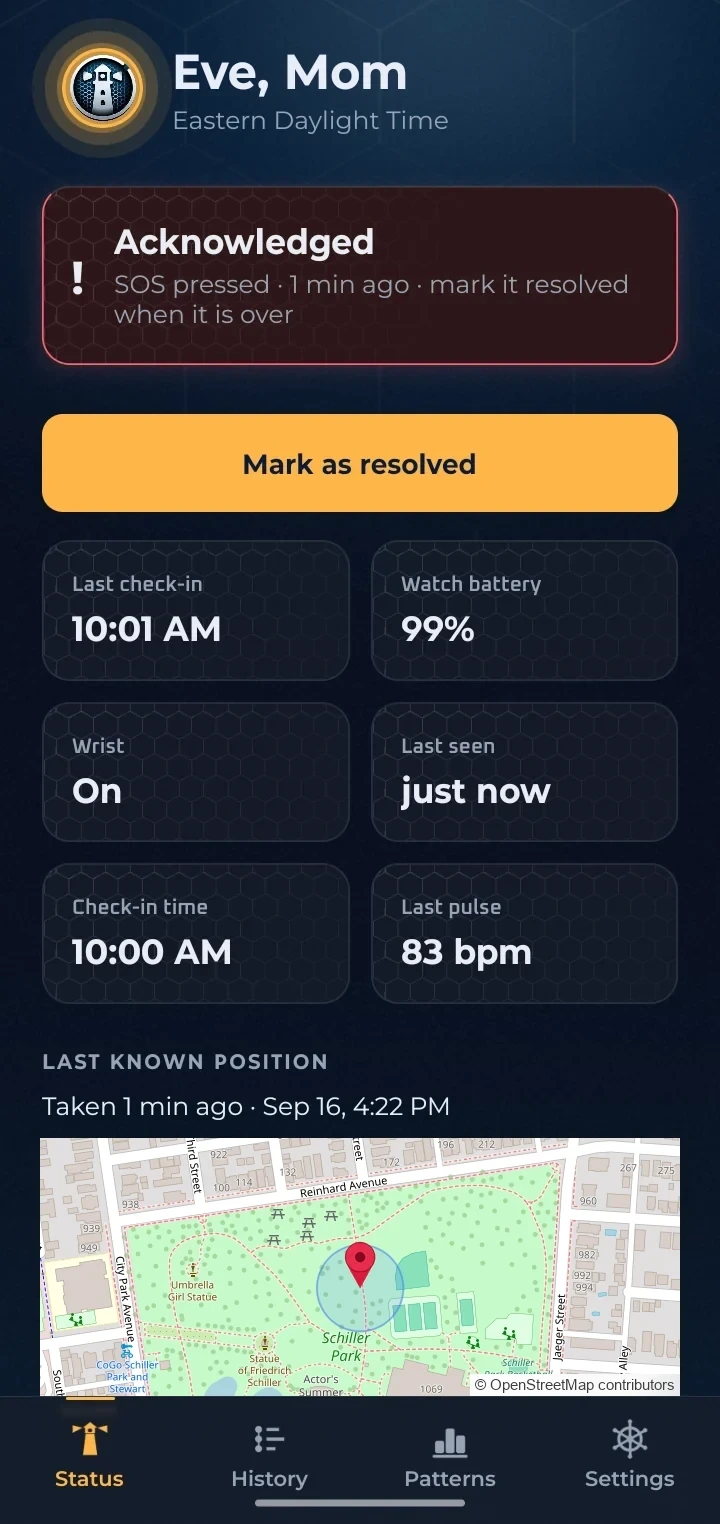
You acknowledge it, and the alerts stop for you and your backup contact.
What we saw: HELP was held at 4:22 PM, the alert was on the phone the same minute, and it was acknowledged within a minute of the press.
Test alert, shown with a sample location. The watch screen is from the current build.
Technium Foundry, a small software company in Jacksonville, Florida. Meet us.
The watch already has emergency features of its own. Lanturne adds the everyday things a family wants. Alerts go straight to you, with a backup contact if you don't respond.
A quick tap each morning shows up on your phone. If it does not come, you get an alert.
See the battery, whether it is on the wrist and when it last checked in, so a flat or forgotten watch does not catch you off guard.
If you are busy and miss an alert, it goes to a second person you trust after a few minutes, at no extra cost.
Walter's check-in is set for 9:00 AM. By 11:00 AM it still has not come, so your phone gets an alert. You call Walter's neighbor, who pops over to check on Walter.
An example, not a real case. More examples, and the research behind them

Five things. Four of them need nobody to press anything.

The morning tap does not come after the wait you set.
The watch stops reporting for longer than you chose.
The watch is on the wrist but finds no pulse and no movement for as long as you chose.
They press and hold the HELP button on the watch.
The watch's own fall detector notices a fall they do not wave off.
Every alert has a Call 911 button that opens your phone's dialer with 911 typed in.
Install Lanturne on their watch and on your phone, then type in the six-digit code the watch shows.
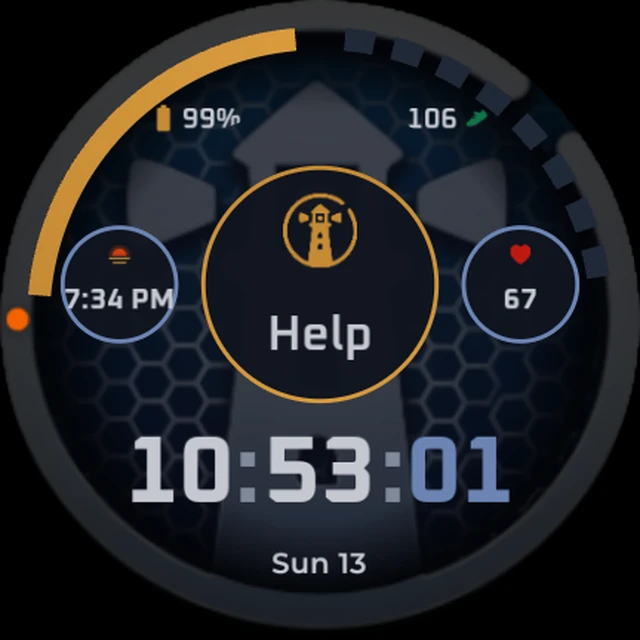
A quick tap each morning, and a HELP button right there whenever they need it.
Alerts go straight to you, with a backup contact if you don't respond.

Not at home. The watch uses Wi-Fi it already knows. Out and about, it needs its own mobile plan, the phone it was set up with nearby, or a phone's hotspot.
No. Alerts go to you and your backup contact. Every alert has a Call 911 button that opens your own phone's dialer.
No product can promise that. Lanturne depends on the watch being worn, charged and connected, and on your phone being able to receive alerts. Treat it as one layer of care, not the only one.
No, and it is not an emergency service. It tells you and your backup contact what the watch noticed.
Give Lanturne a try, free for seven days. Pair the watch, pick a check-in time, and see how it fits your family before you pay a thing. If it is not for you, cancel in Google Play before the week is up and you will not be charged.
7 days free. Cancel any time.


 Start your 7-day free trial